


PointHealth is a clinical AI platform embedded directly within electronic health records (EHRs) that helps clinicians make more precise treatment decisions, starting with behavioral health. Today, only 30–40% of patients respond to their first prescribed medication for depression, leading to prolonged suffering, unnecessary side effects, and increased costs. PointHealth doubles the success of prescriptions by using AI to compare each patient to millions of similar patient journeys and recommend treatments based on real-world outcomes.
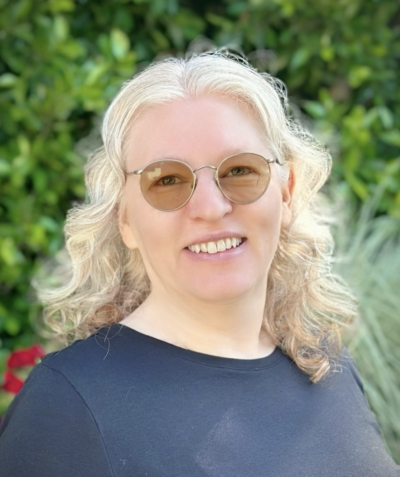
Rachel Gollub, Co-Founder & CEO, Point Health
PointHealth is a clinical decision support (CDS) platform that helps clinicians make more precise treatment decisions, starting with behavioral health. While traditional guidelines provide broad recommendations, they often fall short at the individual patient level resulting in only 30–40% of patients responding to their first medication for depression. PointHealth addresses this gap by delivering treatment decision support powered by real-world data and AI, raising the success of that first prescription to over 70%.
Embedded directly within electronic health records (EHRs), PointHealth analyzes patient characteristics, medical history, and prior treatment responses, comparing each individual to millions of similar patient journeys. The platform then recommends medications based on real-world outcomes, recommending treatments most likely to be effective and those more likely to cause side effects. This approach moves beyond static guidelines to provide dynamic, patient-specific insights at the point of care.
PointHealth’s clinical AI platform has a broad patent, covering using an optional rules engine with a reinforcement learning AI model to recommend the best treatment for a patient. They do not use LLMs or generative AI so they do not have hallucinations or huge inference costs, and instead deliver clinically validated, evidence-based recommendations beyond the capabilities of LLM-based systems.
PointHealth also offers incorporation of pharmacogenomic (PGx) data to inform dosing and identify drug-gene interactions, adding another layer of precision to treatment selection. Designed to integrate seamlessly with systems like Epic and athenahealth, the platform enhances clinical workflows without adding burden to a doctor’s workflow.
PointHealth is expanding beyond behavioral health into additional complex, high-cost disease areas, including cardiovascular and autoimmune conditions, with the long-term vision of building models across a broad range of diseases that enable clinicians to consistently deliver the right treatment to the right patient at the right time.
More about PointHealth
“How startups PointHealth AI and Protege transform health treatment recommendations with AI on AWS” – AWS Blog 2/3/25
“True Wealth Ventures provides an avenue for female founders to find introductions, investment, and support. They ask very good questions, do revenue and return calculations in a clear, understandable way, and make decisions based on clear criteria. They’re also great to work with, very supportive, and very knowledgeable about the industry.” – Rachel Gollub
Co-Founder and CEO: Rachel Gollub
Headquarters: San Francisco, CA
Meet Rachel Gollub
Background: I’m a graduate of Caltech, where I studied computer science and AI (and Russian literature, but that’s another story). Soon after I graduated, I started working at Sun Microsystems, where I was on the original team that invented the Java programming language. When the team got too big, I moved on to a number of startups, then spent some time on staff at Stanford University, where I designed and led the creation of the Stanford Digital Repository. After that, I started founding my own companies. Just before PointHealth, I co-founded an insurance and healthcare startup that we sold to UnitedHealth Group, where I worked for several years as CTO of the Employer & Individual division of United Healthcare, within Optum. I briefly retired, but was excited about the opportunity to build a company to make a difference in the lives of people I care about.
Why Start PointHealth?
When my daughter was in high school, she began to struggle with depression. She was prescribed an antidepressant, but it didn’t help her very much, which is how I discovered that prescribers have a 30-40% success rate with that first prescription for depression. She went through several crises before she found a drug that worked for her (she’s doing great now), and I felt like finding a better prescription the first time was a problem I might be able to solve. I spent a year developing the science behind it, and then brought it to market.
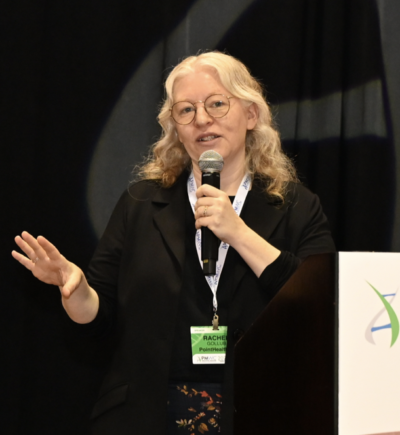
Rachel Gollub, Co-Founder & CEO, Point Health
Why Seek Venture Capital
Developing a product like this is capital intensive. It costs hundreds of thousands of dollars to buy the data necessary, and there are enormous costs involved in setting up hardware to build and run reinforcement learning models efficiently. This wasn’t a product we could bootstrap – it takes investment to build, and investment to break into the healthcare industry.
Why True Wealth Ventures?
Kerry and Sara have a unique perspective that I haven’t seen elsewhere. While female founders generally only account for around 2% of all VC money, True Wealth Ventures provides an avenue for female founders to find introductions, investment, and support. They ask very good questions, do revenue and return calculations in a clear, understandable way, and make decisions based on clear criteria. They’re also great to work with, very supportive, and very knowledgeable about the industry.
Have you seen women General Partners bring a different perspective to the table?
Definitely. There’s a basic skepticism I’ve seen among some general partners while speaking to women, and that skepticism is just not present when at least one of the partners is female.
Do you think a woman’s perspective is valuable to this market?
Women’s perspective is valuable to all markets. We’re more than half the population, we’re more successful in higher education, and our companies are generally more successful. Diversity is a key ingredient to success, and the more varied perspectives a company can get, the better off it will be. This goes double for healthcare – needs are very different for different genders and ethnicities, and having a more varied team brings the value of the company to more people who need it.
Words of Wisdom
Trust yourself. Everything that you do in your life will either be successful or make for a more interesting memoir.